An ongoing series of paintings and installations exploring the political life of historical documents. By translating archival texts into paintings, objects and repeated acts of transcription, the works consider how history is continually rewritten, reproduced and lived in the present.
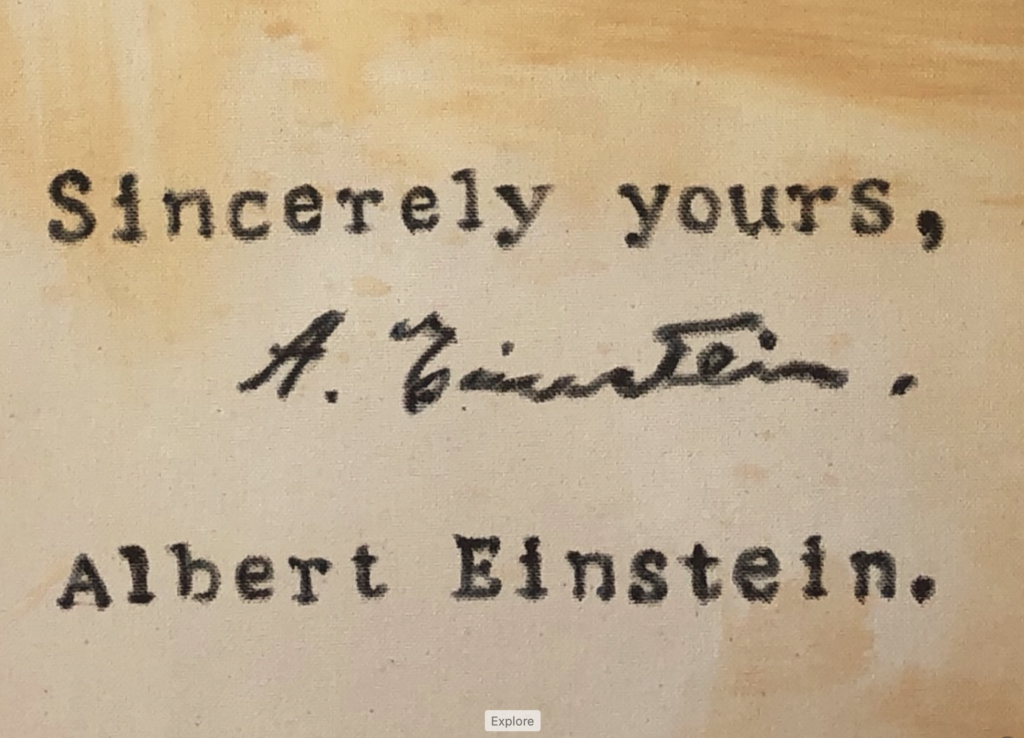
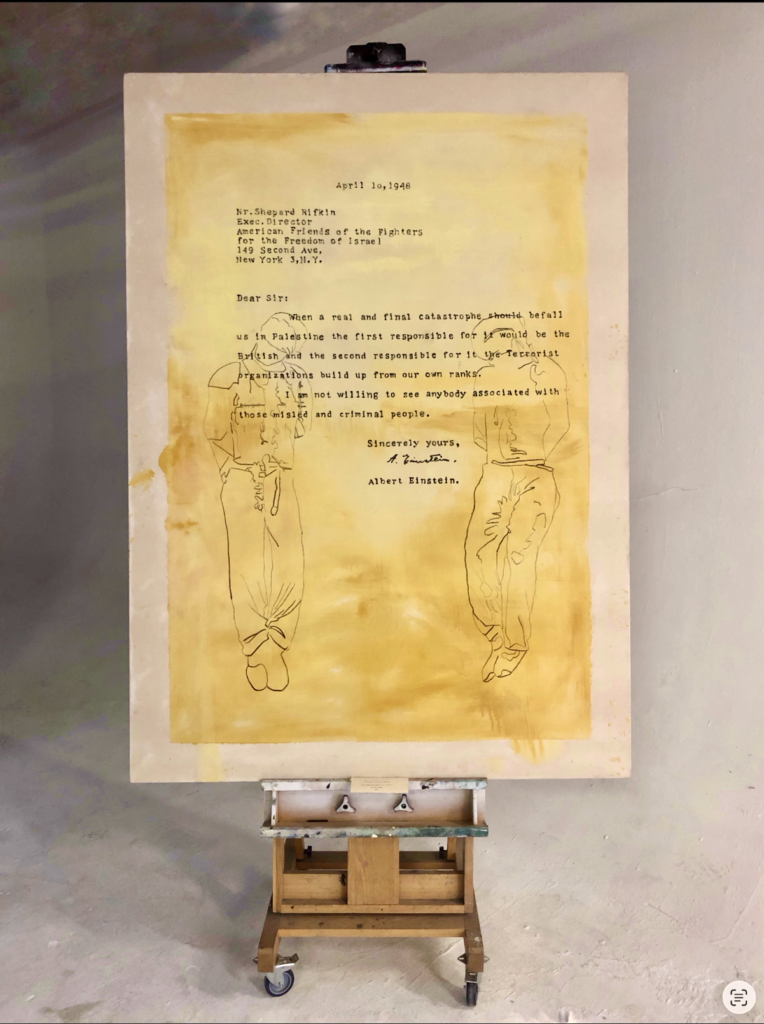
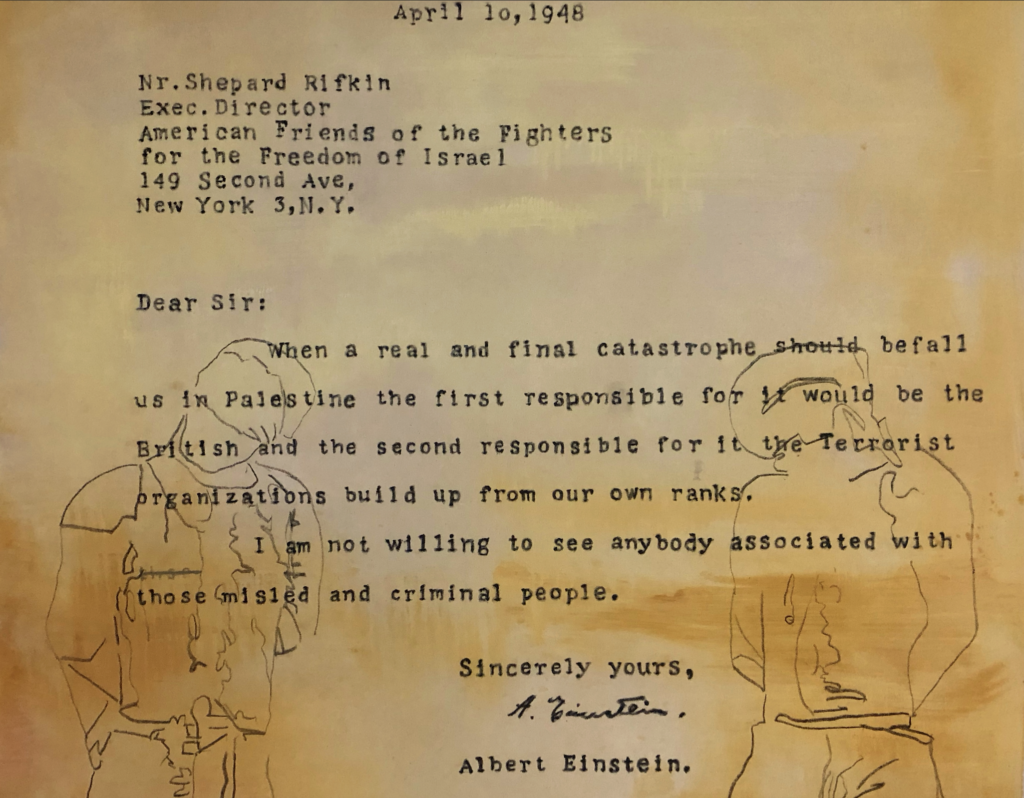
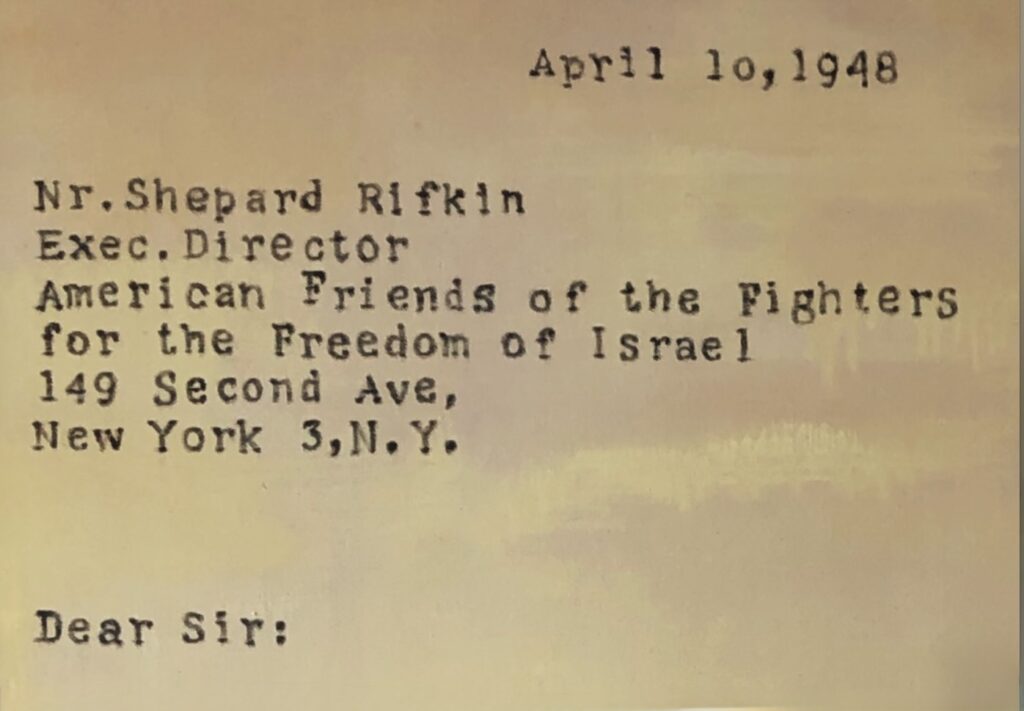
Two Sergeants hanging onto a letter.
Oil on Canvas
2023
In July 1947, British Sergeants Clifford Martin and Mervyn Paice were abducted, held hostage for 17 days and then hanged by members of Irgun. Their dead bodies were booby trapped seriously
injuring those who took the bodies down.
Less than a year later, Albert Einstein warned that “terrorists from our own ranks in Palestine” and “mis-led and criminal people” threatened the moral and political future of the emerging Israeli state. This painting brings these two historical moments into dialogue, treating Einstein’s letter not as commentary but as a document through which the earlier event is re-read.
detail
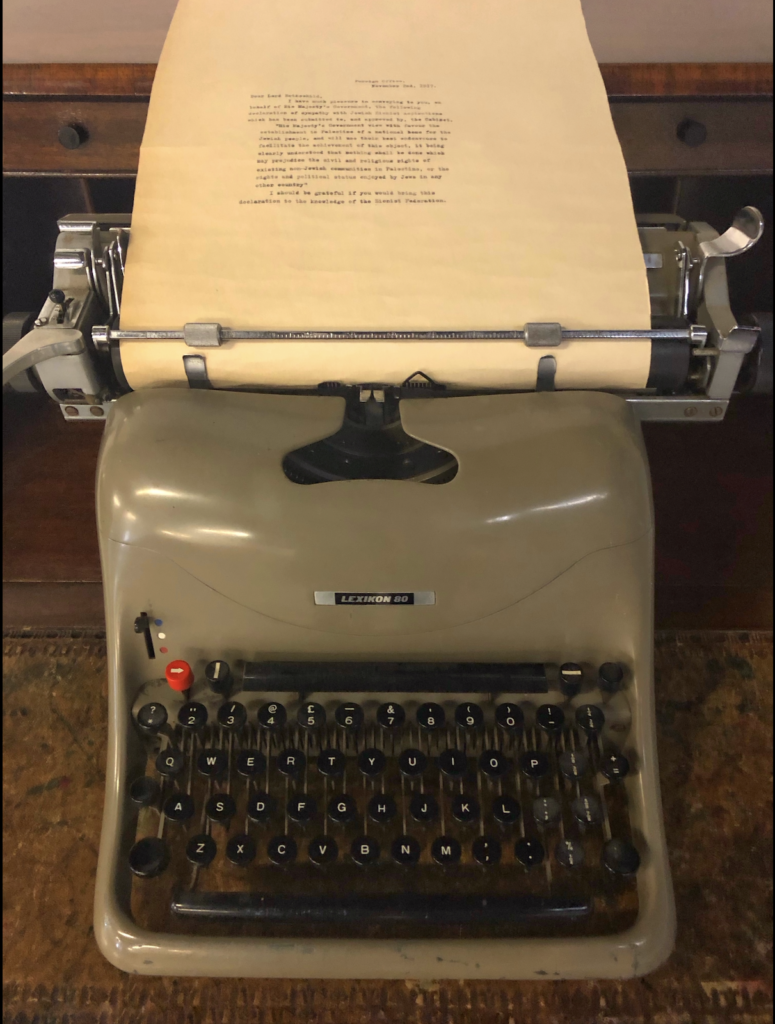
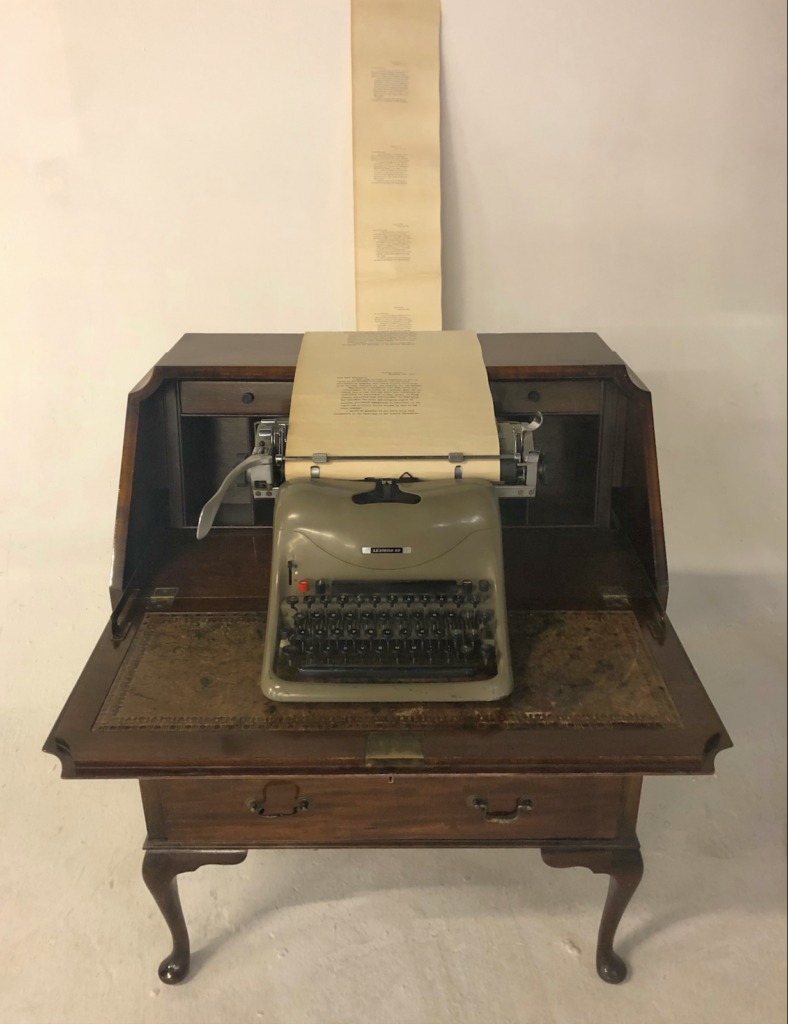
A 1917 document (The Balfour Declaration) endlessly retyped in 2023 on a 1948 typewriter.
The Balfour Declaration is not presented here as an archival relic but as a living document. Repeatedly retyped, it becomes less a historical text than a contemporary event, suggesting that some documents do not merely record history—they continue to produce it.
Once upon a time in a painting.
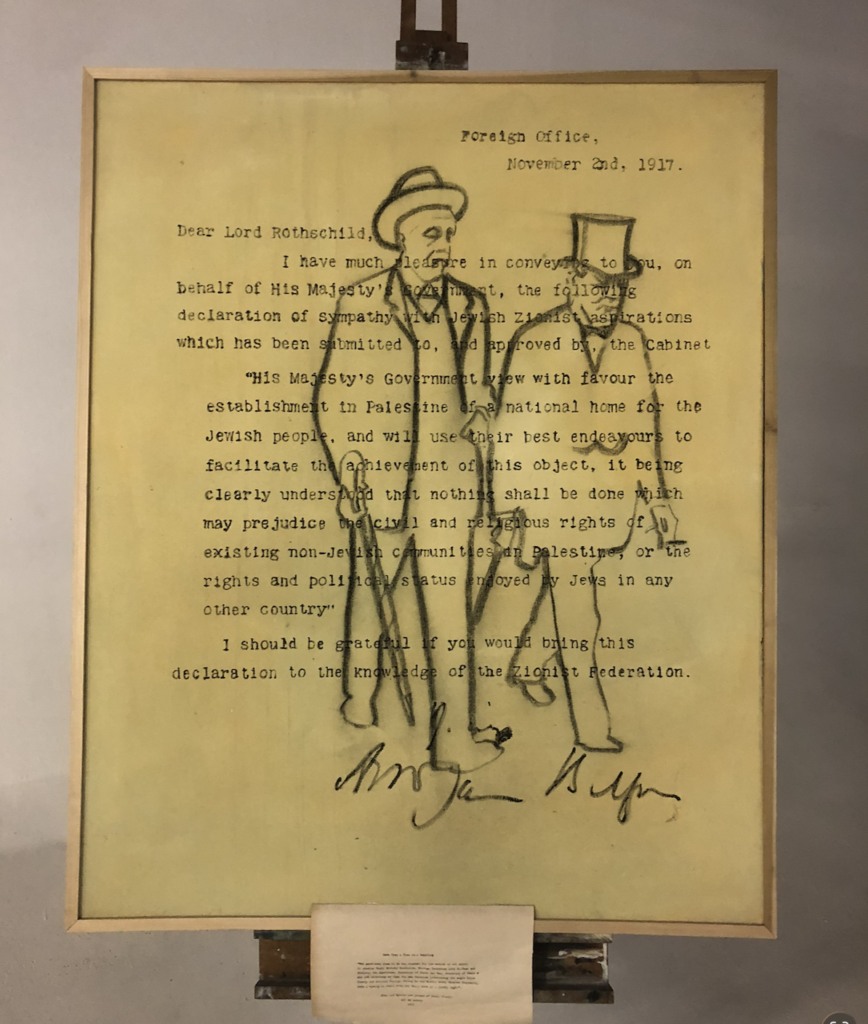
“Two gentlemen step into the present via the medium of oil paint, to examine their history handiwork. Foreign Secretary Lord Balfour and Minister for Munitions, Secretary of State for War, Secretary of State for Air and Secretary of State for the Colonies (overseeing the Anglo Irish Treaty and British Foreign Policy in the Middle East) Winston Churchill, have a spring in their step and their hats at a jaunty angle.
Eton and Harrow are pride of their alumni”.
Oil on Canvas
2021
Documents as Monuments
History is often imagined as something fixed, contained within archives and museums. These works propose the opposite: that certain documents continue to shape the present long after their authors have disappeared.
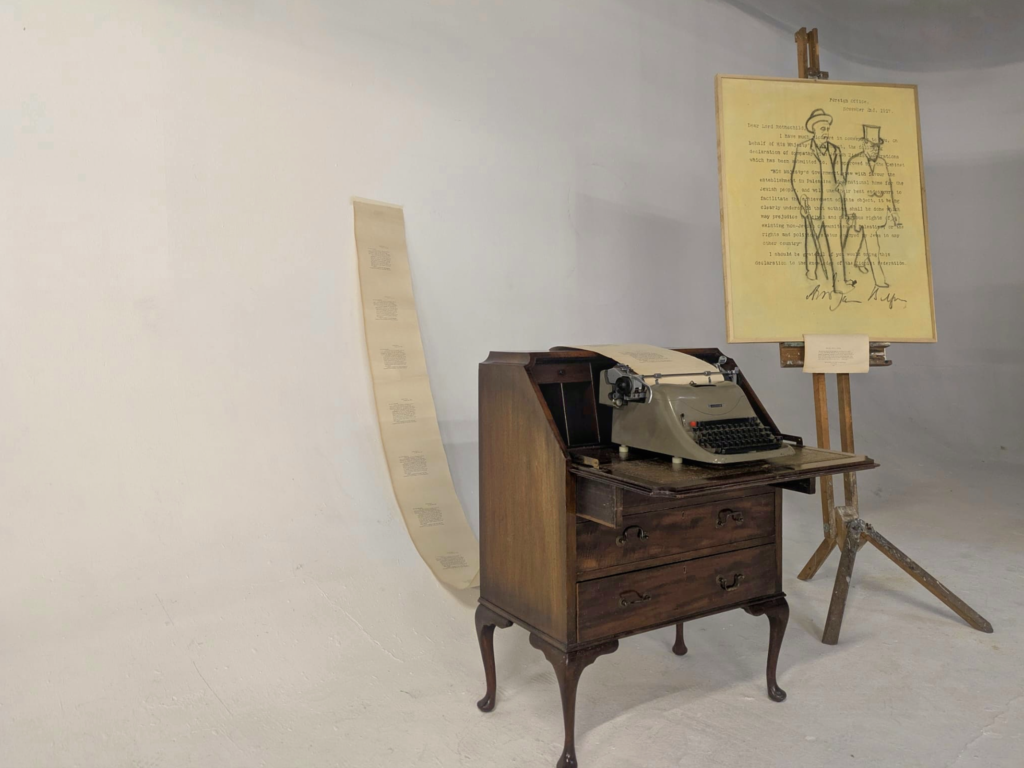
At the centre of the installation, a 1948 Lexikon 80 typewriter endlessly retypes the Balfour Declaration of 1917. The machine, itself a product of the post-war world, becomes a mechanism through which a colonial document is continually returned to the present. The accumulating paper roll transforms the act of typing into a performative gesture, suggesting that history is not merely remembered but repeatedly reproduced.
The companion painting, Once Upon a Time in a Painting, overlays the Balfour Declaration with drawn figures of Lord Balfour and Winston Churchill. The two statesmen appear to step directly from the document into the contemporary world, their jaunty stride and effortless confidence contrasting with the historical consequences of the policies they helped to shape. The fairy-tale title introduces a note of irony, inviting viewers to reconsider the relationship between political myth, imperial history and historical memory.
Together, the installation and painting collapse distinct historical moments into a single continuum: a declaration written in 1917, a typewriter manufactured in 1948, and an act of retyping performed in 2023. Rather than presenting archival material as passive evidence, the works treat documents as active agents. They ask whether certain texts cease to belong to history at all, or whether they continue to organise the political realities of the present.