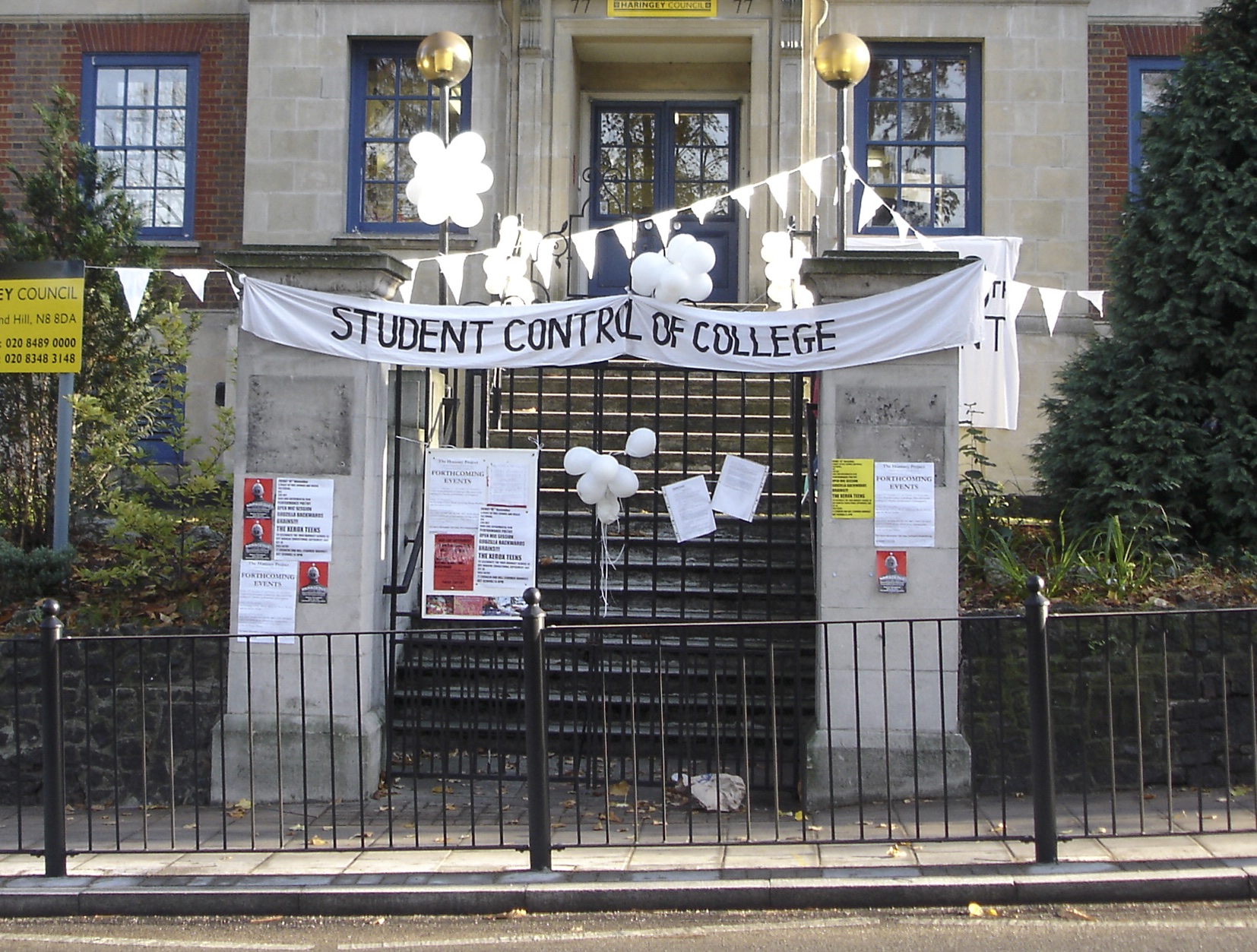
The Hornsey Project:
The (re)Opening of Hornsey School of Art.
37 years later, October 2005.
Reopening Hornsey
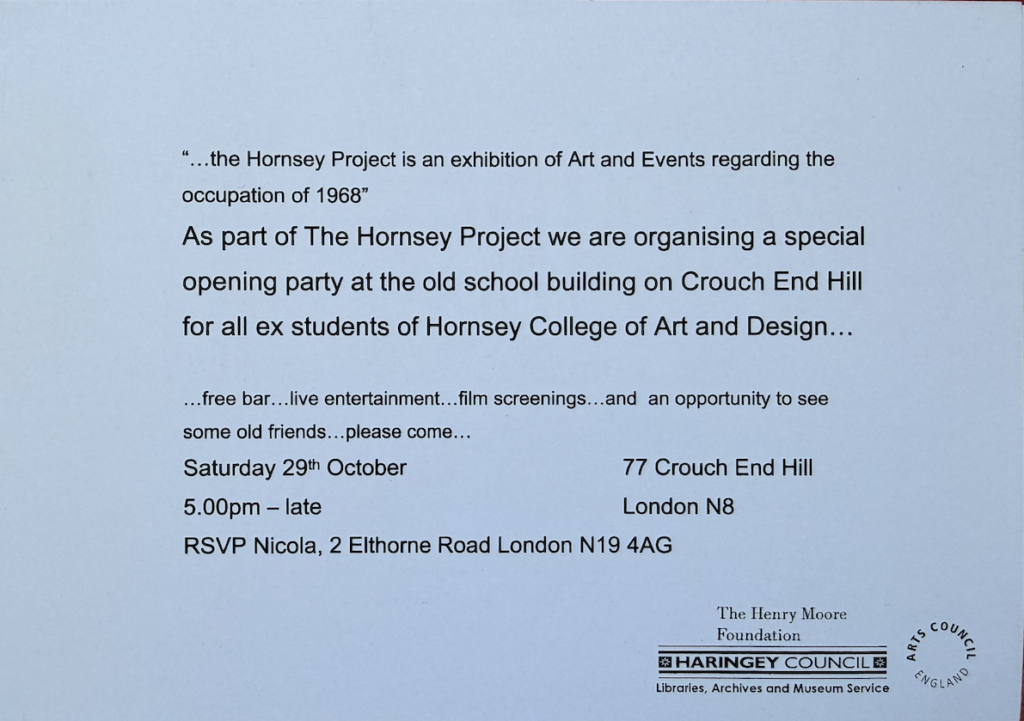
When the Trades Union Congress vacated the former Hornsey College of Art building, artists Jamie Wagg and Nicola Shilcock temporarily reopened the site of the 1968 occupation as a functioning art school. Rather than staging an historical reconstruction or commemorative reunion, the project reactivated the building as a place of discussion, teaching and political debate.
Lectures, seminars, workshops and film screenings brought together artists, historians and critics, including Esther Leslie, Terry Atkinson and Lynda Morris. An exhibition of original posters, documents and ephemera produced during the 1968 occupation was presented alongside recreated banners and signage. Former participants in the occupation were invited to meet a new generation of art students, creating an opportunity for direct conversation across four decades of art education.
As Wagg remarked at the time:
“I want the young people of today to meet the young people of yesterday. I want them to see that there was a generation of people who absolutely felt they could affect things; who felt politically engaged.”
The project was deliberately detached from anniversary culture. No significant dates were observed, and the event was conceived neither as a reunion nor as an exercise in nostalgia. Instead, it asked what the Hornsey occupation might still offer contemporary debates surrounding art education. By placing two generations into dialogue, the project shifted attention from the historical event itself towards the continuing relationship between artistic practice, political agency and education.
Seen in retrospect, Reopening Hornsey anticipates concerns that have remained central throughout Wagg’s subsequent work. Rather than treating history as a sequence of completed events, it proposed that historical moments acquire renewed significance when reactivated within the present. The project transformed the archive into a living encounter, demonstrating that historical understanding emerges not through preservation alone but through the relationships established between past and present.
Today, as questions surrounding the purpose of art education continue to be debated, Reopening Hornsey can be understood not as an act of commemoration but as an early example of Wagg’s broader methodology: using historical situations to construct new conversations rather than simply to remember old ones.
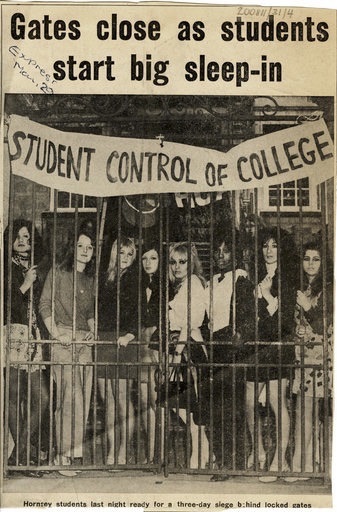
Hornsey Students in 1968
Daily Express 29th May
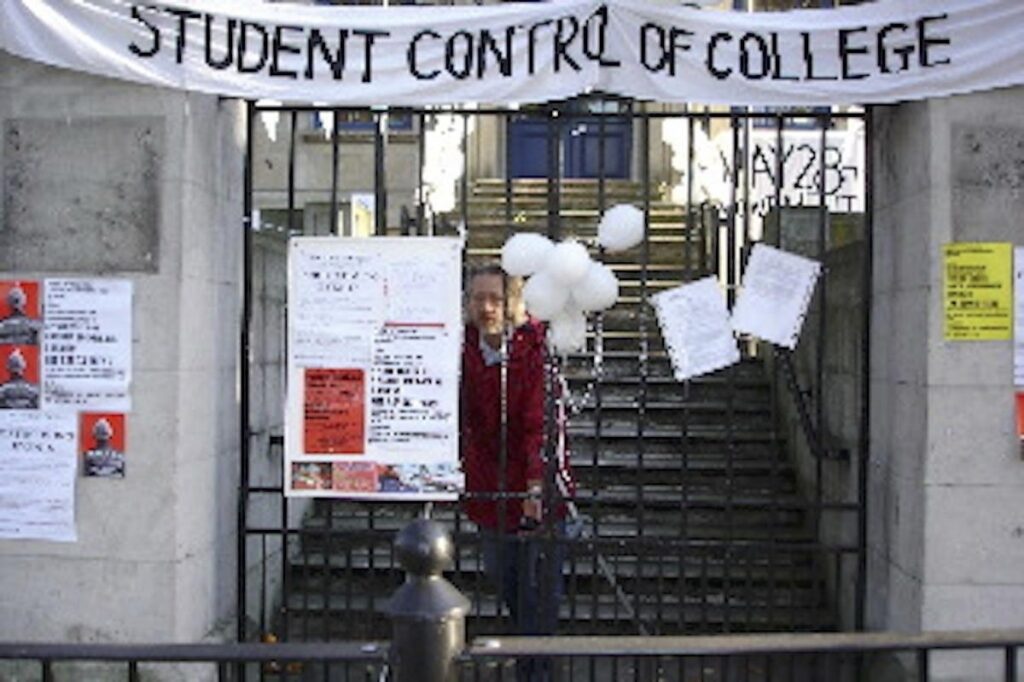
The Artist Jamie Wagg, Oct 2005.
Nursing a broken leg from installation accident
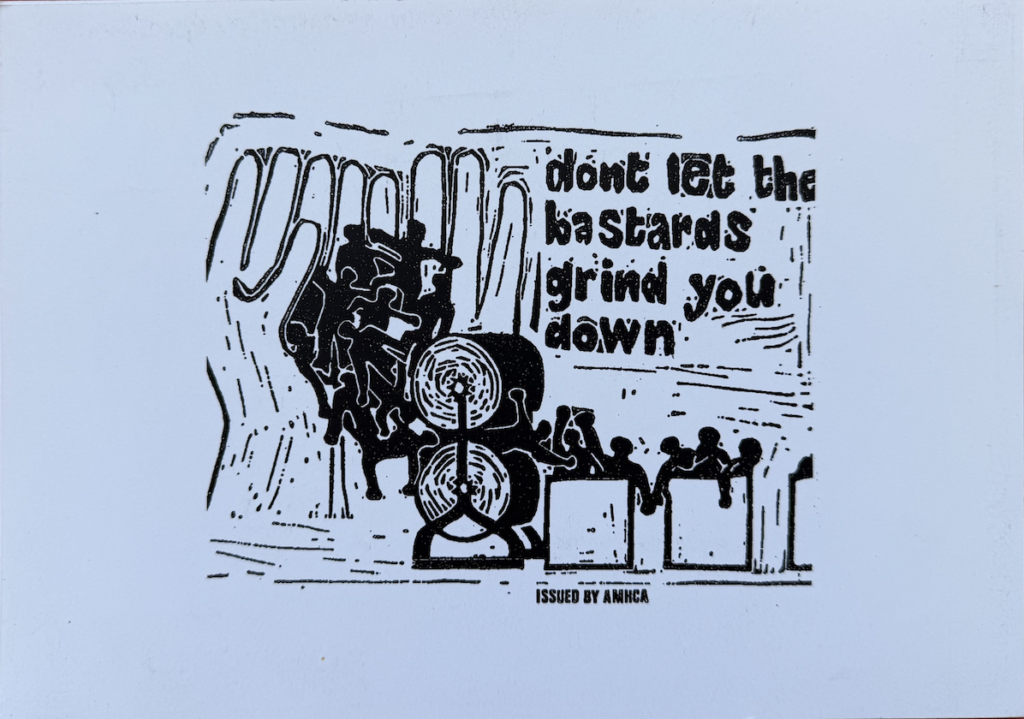
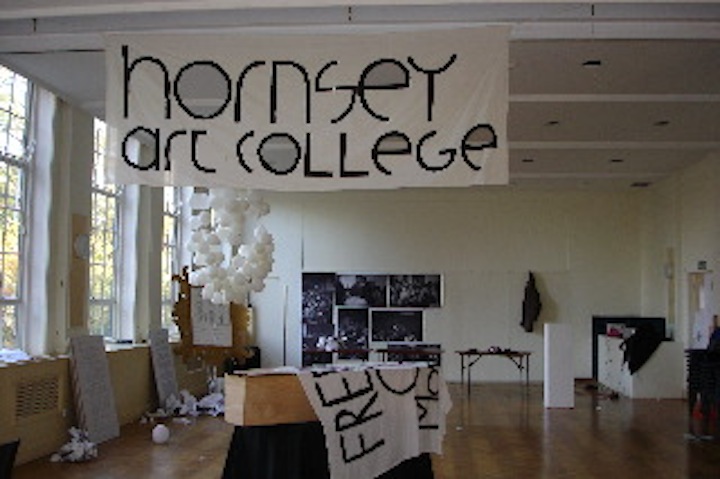
reconstruction of the student occupation, including the Coffin the Art Education was buried in.
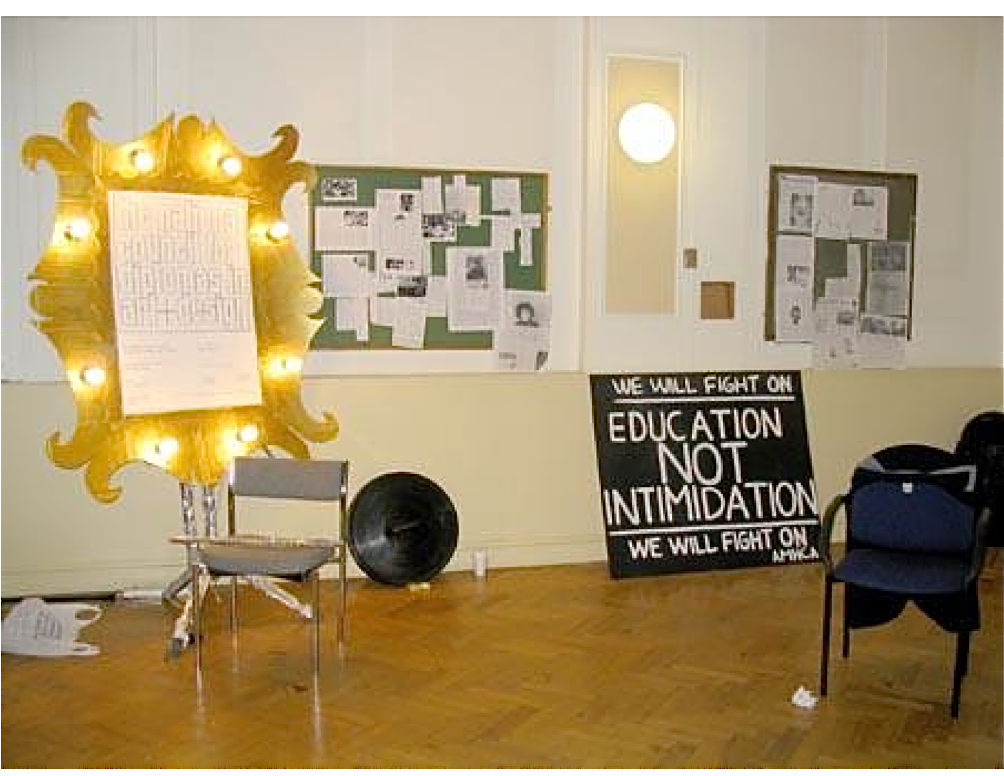
replicas of 1968 occupation detritus
BBC 4 news clip with Zeinab Badawi broadcast October 2005