‘History Painting’
The titles ‘History Painting’ Shopping Mall. 15:42:32 12/02/93 – ‘History Painting’ Railway Line deliberately place History Painting in inverted commas. The quotation marks are not typographical decoration; they signal a question. Can these works be considered history paintings at all? They depict a contemporary event rather than a distant historical one, and they were not made with paint but through the digital manipulation of mechanically reproduced images. The titles therefore ask what history painting might mean at the end of the twentieth century.
The two works draw upon two very different forms of image production. ‘History Painting’ Shopping Mall. 15:42:32 12/02/93 is derived from CCTV surveillance footage released by police in an attempt to identify the two boys seen walking with James Bulger. ‘History Painting’ Railway Line derives from a press photograph made after the discovery of Bulger’s body. Rather than reproduce the widely published image, I cropped it to exclude the police tent covering the murder scene. What remains are two police officers standing at a distance, apparently guarding the site. The work is therefore not an image of the murder itself but of its mediation.
One image belongs to surveillance; the other to photojournalism. Together they examine two different systems through which contemporary events become public knowledge.
By 1993 both images had already entered public consciousness through mass media circulation. Almost everyone had seen them. My interest was therefore not in revealing hidden images but in changing the conditions under which familiar images were read. Removed from newspaper headlines and television reports, they could be considered differently.
The surveillance image also exposed a contradiction that has only become more evident since. CCTV did not prevent the crime; it merely recorded it. The camera functioned less as an instrument of protection than as a recording device, producing evidence after the event. It watched history happen but possessed no capacity to intervene.
Equally striking was the public reaction. The murder generated extraordinary media hysteria. Crowds gathered outside courtrooms demanding retribution against two ten-year-old boys. Much public language relied upon terms such as evil or feral—descriptions that appeared to remove the event from its social and political context and relocate it within the language of morality or religion, as though the crime existed outside history itself.
My reading was different. I saw the case as inseparable from the conditions produced by late Thatcherism: widening inequality, the dismantling of aspects of the welfare state and the social consequences of political decisions. At the time, parts of Britain had been identified by the International Red Cross as requiring food aid—an extraordinary indication of social distress within one of the world’s wealthiest countries. Rather than understand the event solely through the actions of individuals, I wanted to ask what kind of society produces such conditions.
This returns us to the question posed by the title. Traditionally, history painting celebrated rulers, military victories or moments of national triumph. It often served to reinforce the authority of those in power. These works attempt the opposite. Rather than celebrate political power, they examine its consequences. They ask whether contemporary history painting might shift its attention away from heroic narratives and towards the social realities created by political choices.
There is another question embedded in these images. The famous CCTV still appears, at first glance, to show nothing more than three boys walking together, two of them holding hands. Only because we already know what followed do we read the image as evidence of tragedy. The image itself does not contain that meaning. It acquires it through context, memory and narrative. The gap between what the image literally shows and what we know it signifies became one of the central concerns of these works.
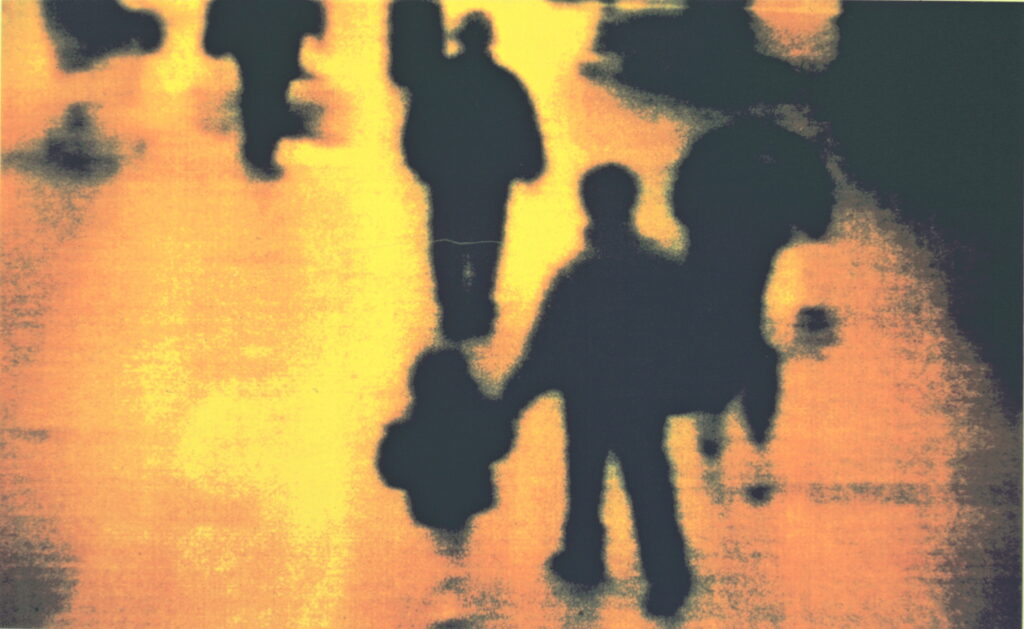
‘History Painting’ Shopping Mall 15:42:32 12/02/93
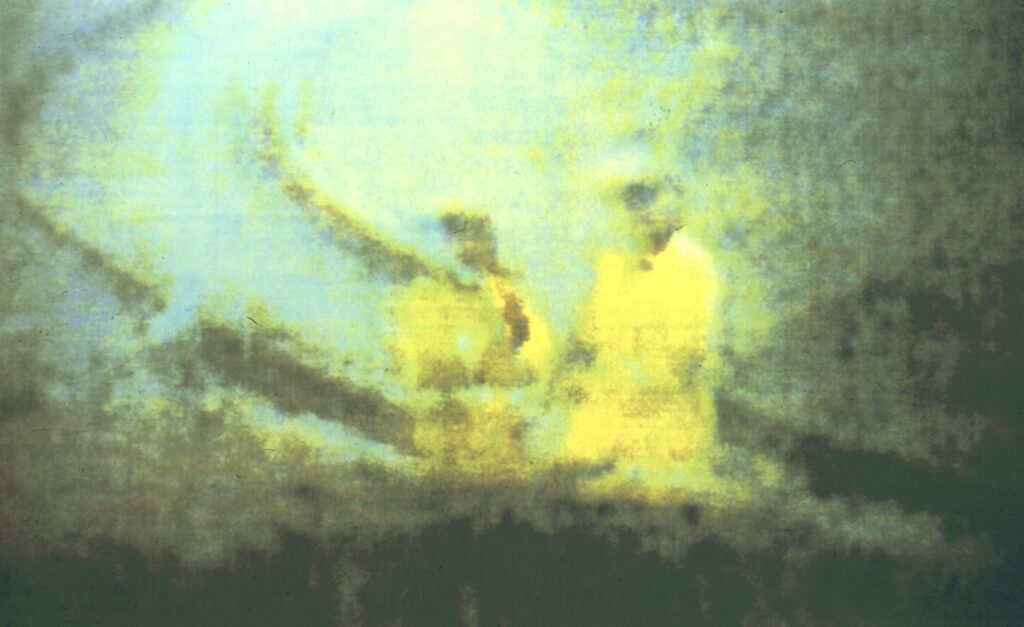
‘History Painting’ Railway Line.
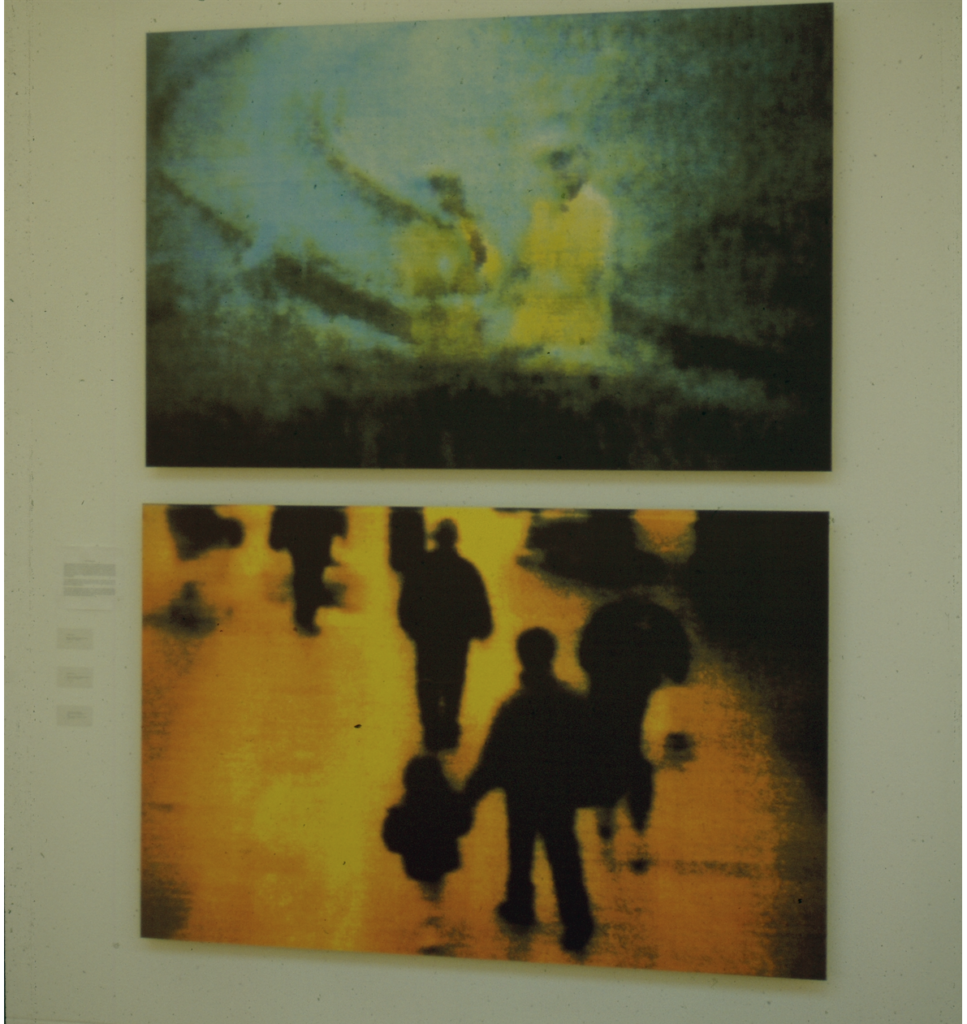
The following two images show the works during the exhibition at the Whitechapel Gallery 1994
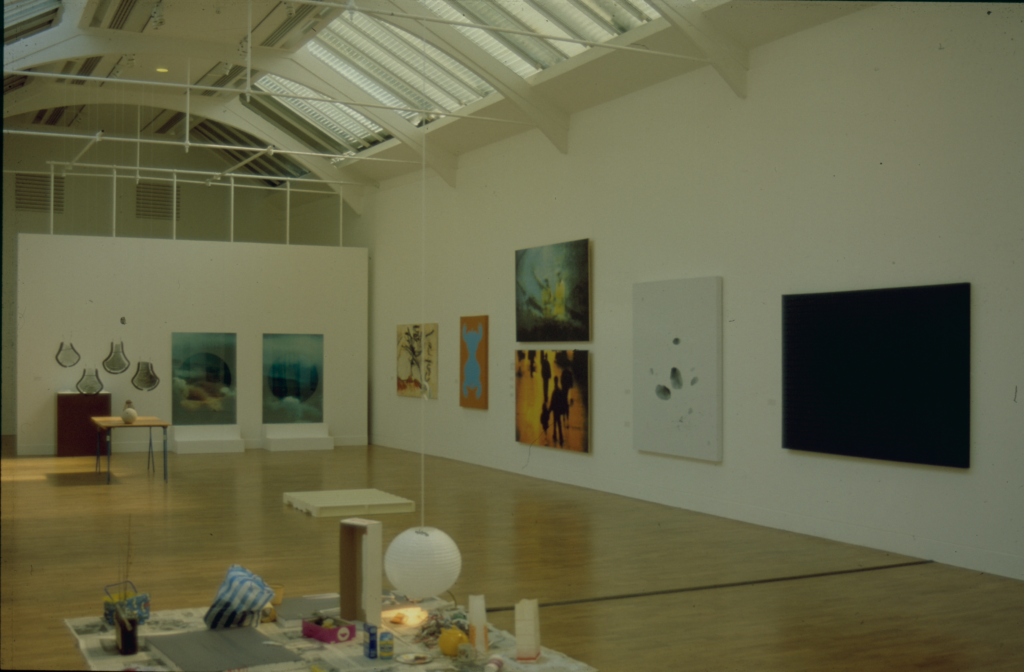
Project Archive
This project generated extensive contemporary discussion, including critical essays, press coverage and archival documentation.